
Voice Activation Module


Voice Activation Module
Voice Activation Module
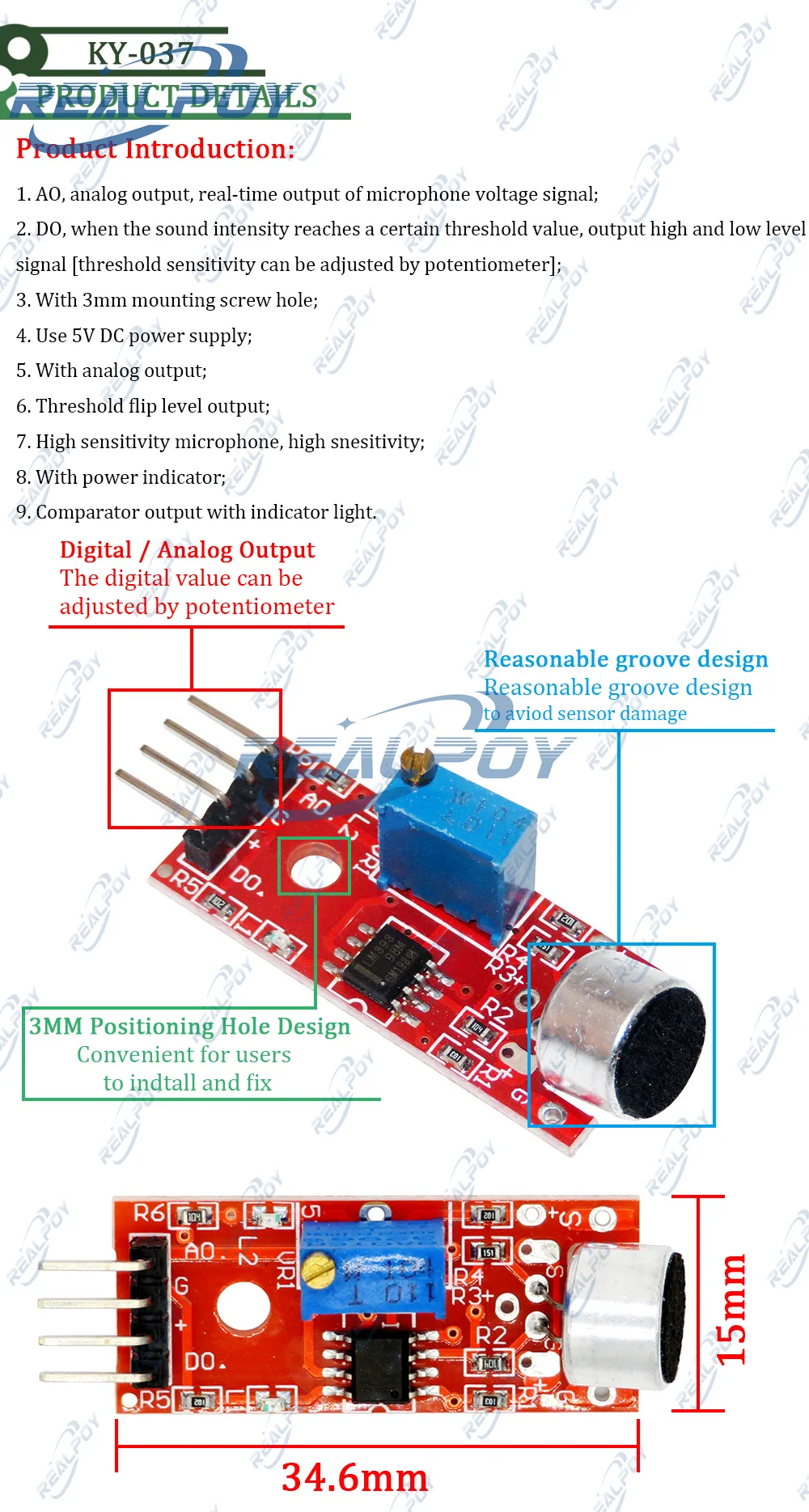
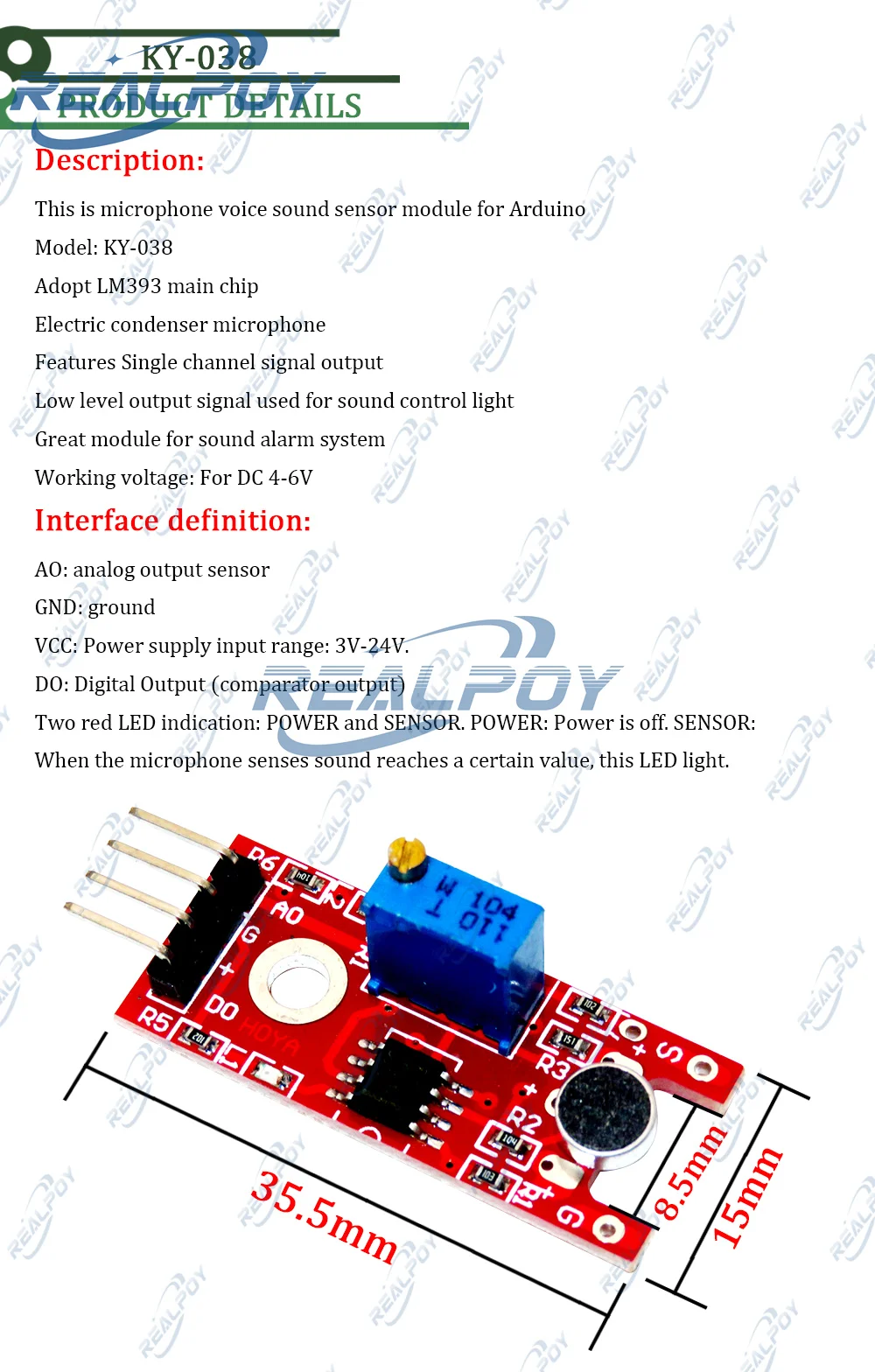
Unlock voice-activated and sound-responsive control for your Arduino, AVR, or PIC projects with a compact, plug‑and‑play microphone sensor. Built around an ultra‑sensitive microphone and a ready‑to‑use amplifier, this module delivers both an analog signal (A0) for waveform analysis and a digital signal (D0) to trigger your code when sound crosses a chosen threshold. Inspired by the KY-038/KY-037 family, it’s a practical, hands‑on way to explore sound sensing without complex software stacks.
Key features that matter in the real world
- Dual outputs for flexible sensing: analog A0 for waveform insights and digital D0 for event triggering
- Adjustable sensitivity: trim potentiometer tailors detection for whisper quiet rooms or loud environments
- Plug-and-play integration: quick wiring to common microcontroller pins, compatible with 3.3V–5V logic
- Compact and cost‑effective: small footprint ideal for breadboards, wearables, classrooms, and simple embedded projects
- Educational and hobbyist friendly: a practical way to learn sound sensing, thresholds, and basic signal processing
How it works and why it matters
The module houses a microphone and preamplifier that feed a simple comparator. When the sound level exceeds the tuned threshold, the digital output closes the loop and prompts your MCU to react—perfect for clap detectors, voice-activated lighting, or audible alerts. The analog output provides a raw, amplified signal you can analyze or filter to derive precise sound level metrics, enabling projects from classroom demonstrations to nuanced sound-triggered devices.
Ideal use cases
- Clap- or voice-triggered lights, alarms, or musical effects in hobbyist setups
- Environmental sound level monitoring for smart home experiments
- Interactive installations and educational kits that illustrate signal processing basics
- Low-cost prototyping of voice-activated controls for embedded systems
Wiring and setup (quick start)
- VCC to your board’s power rail (ensure consistency with your MCU logic level)
- GND to ground
- A0 (analog output) to an analog input on your MCU
- D0 (digital output) to a digital input on your MCU
- Calibrate the sensitivity using the onboard potentiometer until the digital output reliably triggers at your desired sound level
- For stable readings, consider software debouncing and, if needed, a small RC filter to smooth spikes in the analog signal
Who should consider this module?
- Students and educators building hands‑on electronics or sound-processing lessons
- Hobbyists crafting voice- or clap-responsive gadgets
- Developers prototyping low‑cost sound sensing for microcontroller projects
- DIY researchers exploring interactive art, wearables, or classroom demos