
Stepper Motor
28YBJ-48 and ULN2003
£3.50
Skip to product information

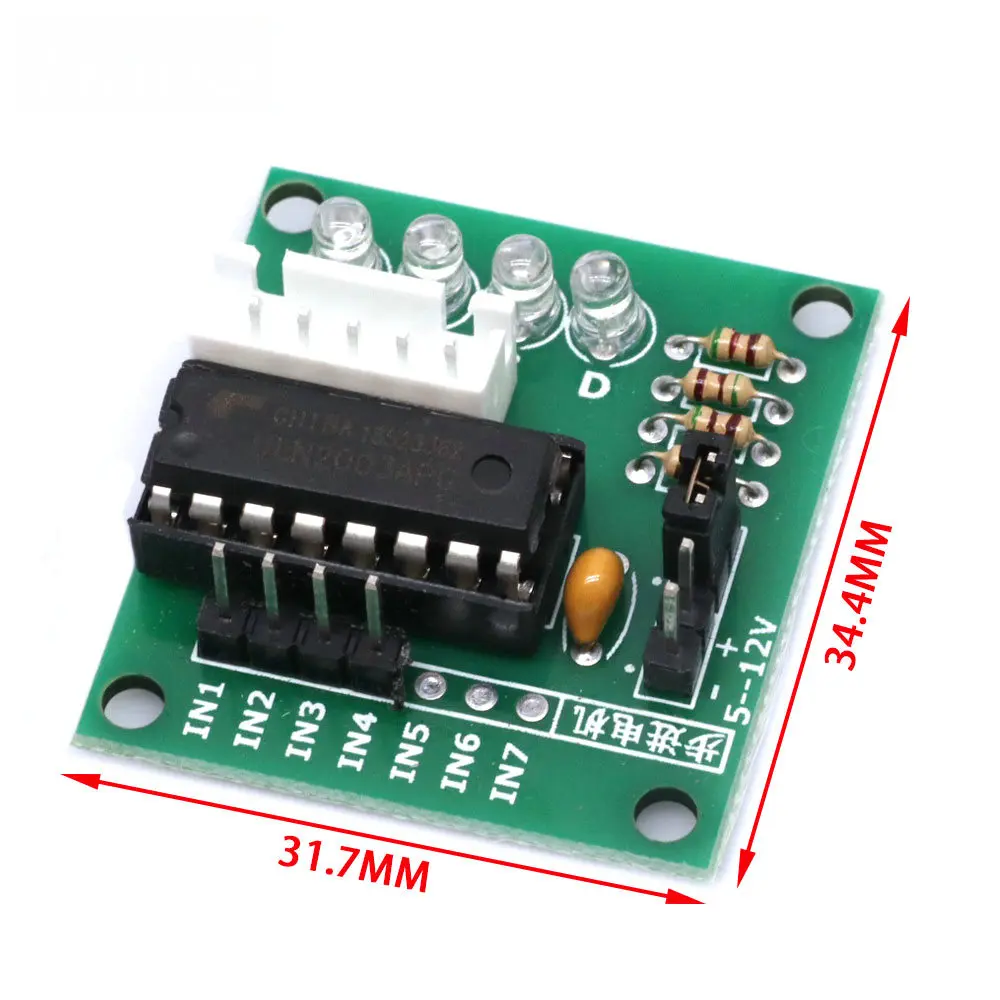
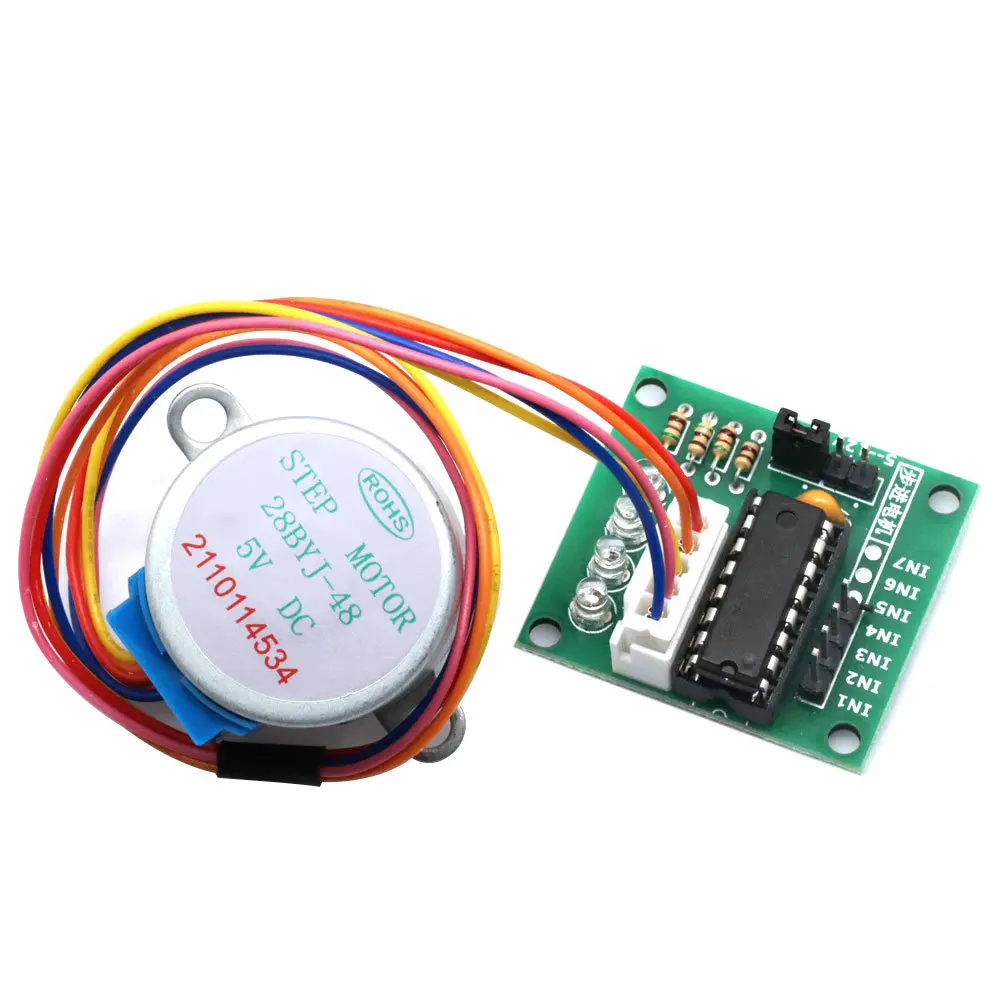
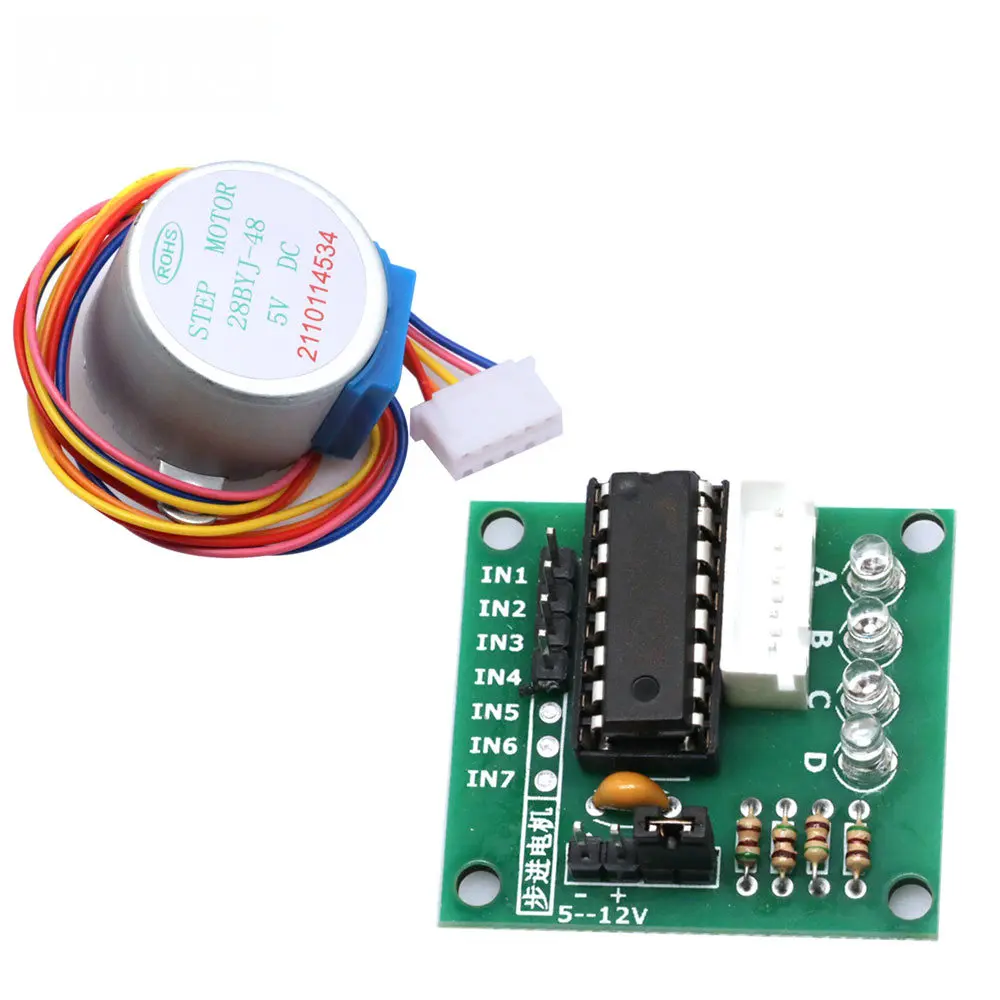
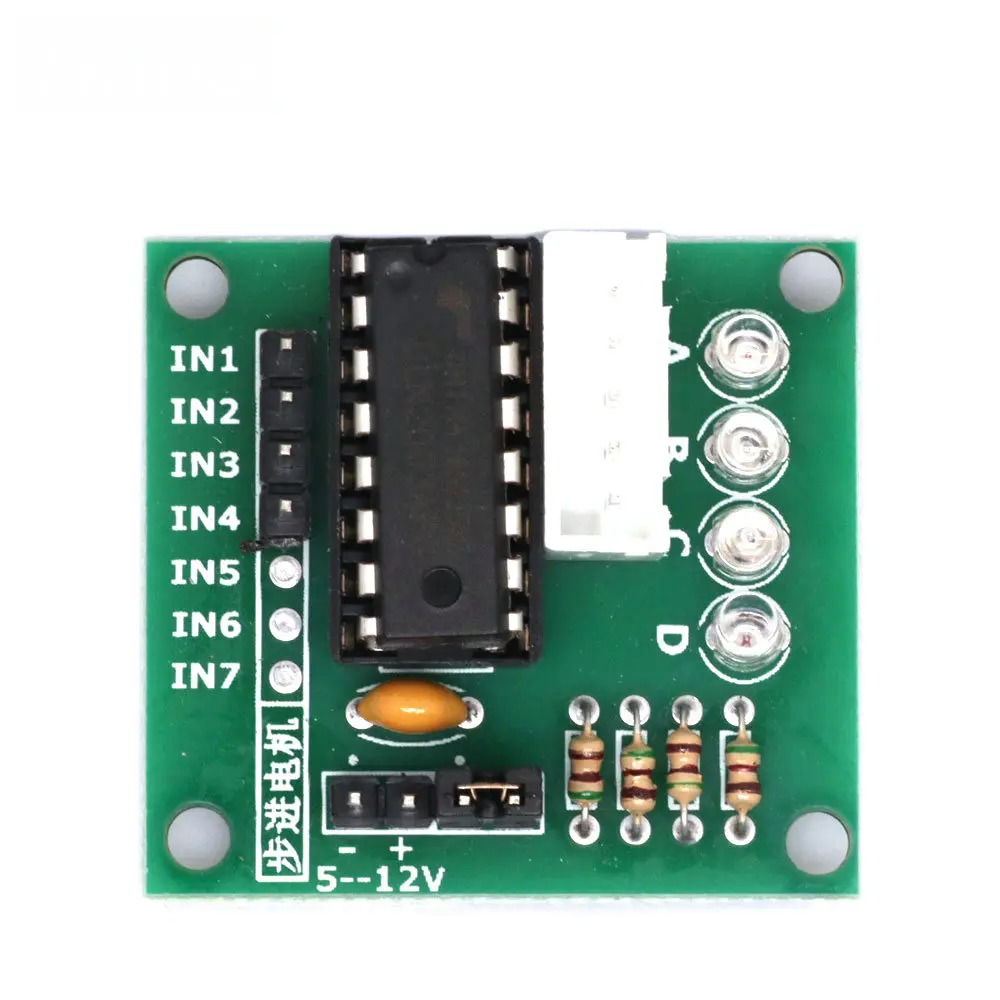
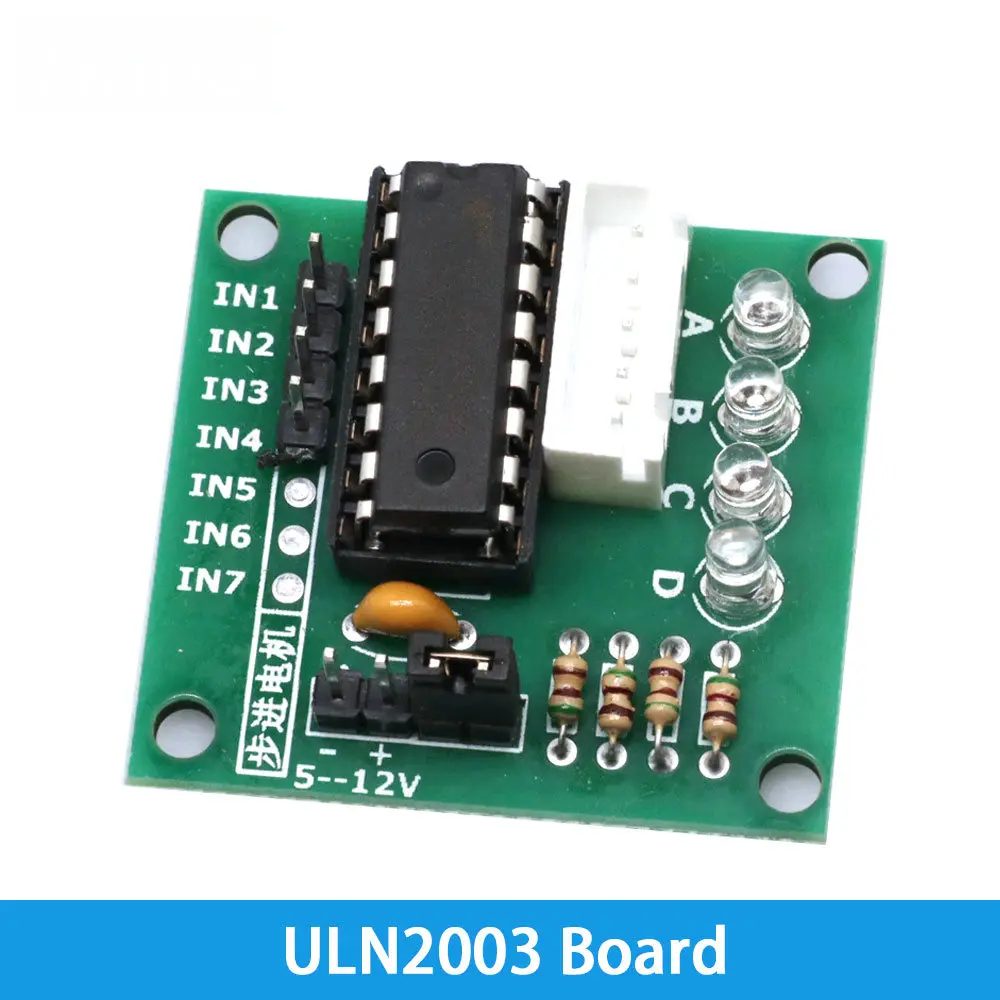
 Take your Arduino and microcontroller projects to the next level with the 28BYJ-48 DC gear stepper motor paired with the ULN2003 driver board. This compact, reliable 4-phase stepper delivers precise, repeatable motion for small robotics, automation, and educational kits. With a robust gear reduction and a 5V DC supply, you’ll get fine control without complex wiring or power management. Key features that matter in real projects
- 5V DC operation with a 4-phase unipolar design: simple, widely compatible with Arduino, Raspberry Pi GPIO, and other microcontrollers
- 1/64 gear reduction yields ultra-precise output: 5.625° step angle at the motor shaft, equating to 0.0879° per full step at the final output for about 4096 steps per revolution
- Built-in ULN2003 driver compatibility: wire directly to the driver board and drive with standard step pulse signals
- Durable electrical specs: coil resistance around 200 Ω ±7% (25°C); insulation resistance >10 MΩ (500V); dielectric strength 600V AC / 1 mA / 1 s
- Wide operating temperature: -40°C to +85°C, suitable for varied hobby and educational environments
- Measured performance thresholds: no-load pull-in frequency > 600 Hz; no-load pull-out frequency > 1000 Hz; pull-in torque > 34.3 mN·m (120 Hz); detent torque > 34.3 mN·m
- Quiet operation and compact footprint: less than 40 dB noise under typical no-load conditions at 120 Hz, with a compact board size around 29 × 21 mm Why this motor is a standout for hobbyists and makers
- Unparalleled resolution in a small package: the 1/64 reduction ratio means you get extremely fine positioning without bulky gearing or expensive drivers. It’s ideal for miniature robotics, precise pan/tilt mechanisms, automated cassettes, and small CNC or engraving projects.
- Arduino-friendly workflow: the ULN2003-driven module is designed for straightforward control. Use standard step commands or common libraries (like AccelStepper) to implement smooth acceleration profiles and accurate positioning.
- Durable, reliable design for education and experimentation: wide temperature tolerance and solid insulation specs mean you can prototype in classrooms, benches, or workshops without worrying about edge-case conditions. Practical use cases and setup tips
- Robotics: create a compact rover or robotic arm with precise micro-positioning for grippers or sensors.
- Camera and light control: build a tiny tilt/shake mechanism for time-lapse photography or stage lighting with repeatable presets.
- Educational kits: teach stepper motor fundamentals, torque, gear ratios, and motion control using real hardware and hands-on labs.
- Prototyping: test motion profiles and positioning routines on a low-cost platform before upgrading to larger motors. What makes this solution better than bare motors
- Convenience: the ULN2003 driver board is integrated into the ecosystem, reducing the guesswork around drive electronics and wiring.
- Predictable performance: the documented pull-in/pull-out frequencies and torque values give you clear expectations for response times and load handling in real projects.
- Proven compatibility: proven success with 5V microcontroller systems makes it a reliable choice for learners and seasoned makers alike. Product specs at a glance
- Rated voltage: DC 5V
- Type: 4-phase unipolar step motor with gear reduction
- Reduction ratio: 1/64
- Step angle: 5.625° (motor), output angle ~0.0879° with gearing
- Output torque: pull-in > 34.3 mN·m; detent > 34.3 mN·m
- No-load frequencies: pull-in > 600 Hz; pull-out > 1000 Hz
- DC resistance: 200 Ω ±7% (25°C)
- Insulation resistance: > 10 MΩ (500 V)
- Dielectric strength: 600 V AC / 1 mA / 1 s
- Noise: < 40 dB (120 Hz, no-load, 10 cm)
- Operating temperature: -40°C to +85°C
- Board footprint: approximately 29 × 21 mm This combination of compact size, precise gearing, robust electrical specifications, and Arduino-friendly wiring makes the 28BYJ-48 with ULN2003 driver an essential building block for hands-on motion control, automation, and learning projects. Add it to your toolkit and start turning ideas into repeatable, measurable motion.
Take your Arduino and microcontroller projects to the next level with the 28BYJ-48 DC gear stepper motor paired with the ULN2003 driver board. This compact, reliable 4-phase stepper delivers precise, repeatable motion for small robotics, automation, and educational kits. With a robust gear reduction and a 5V DC supply, you’ll get fine control without complex wiring or power management. Key features that matter in real projects
- 5V DC operation with a 4-phase unipolar design: simple, widely compatible with Arduino, Raspberry Pi GPIO, and other microcontrollers
- 1/64 gear reduction yields ultra-precise output: 5.625° step angle at the motor shaft, equating to 0.0879° per full step at the final output for about 4096 steps per revolution
- Built-in ULN2003 driver compatibility: wire directly to the driver board and drive with standard step pulse signals
- Durable electrical specs: coil resistance around 200 Ω ±7% (25°C); insulation resistance >10 MΩ (500V); dielectric strength 600V AC / 1 mA / 1 s
- Wide operating temperature: -40°C to +85°C, suitable for varied hobby and educational environments
- Measured performance thresholds: no-load pull-in frequency > 600 Hz; no-load pull-out frequency > 1000 Hz; pull-in torque > 34.3 mN·m (120 Hz); detent torque > 34.3 mN·m
- Quiet operation and compact footprint: less than 40 dB noise under typical no-load conditions at 120 Hz, with a compact board size around 29 × 21 mm Why this motor is a standout for hobbyists and makers
- Unparalleled resolution in a small package: the 1/64 reduction ratio means you get extremely fine positioning without bulky gearing or expensive drivers. It’s ideal for miniature robotics, precise pan/tilt mechanisms, automated cassettes, and small CNC or engraving projects.
- Arduino-friendly workflow: the ULN2003-driven module is designed for straightforward control. Use standard step commands or common libraries (like AccelStepper) to implement smooth acceleration profiles and accurate positioning.
- Durable, reliable design for education and experimentation: wide temperature tolerance and solid insulation specs mean you can prototype in classrooms, benches, or workshops without worrying about edge-case conditions. Practical use cases and setup tips
- Robotics: create a compact rover or robotic arm with precise micro-positioning for grippers or sensors.
- Camera and light control: build a tiny tilt/shake mechanism for time-lapse photography or stage lighting with repeatable presets.
- Educational kits: teach stepper motor fundamentals, torque, gear ratios, and motion control using real hardware and hands-on labs.
- Prototyping: test motion profiles and positioning routines on a low-cost platform before upgrading to larger motors. What makes this solution better than bare motors
- Convenience: the ULN2003 driver board is integrated into the ecosystem, reducing the guesswork around drive electronics and wiring.
- Predictable performance: the documented pull-in/pull-out frequencies and torque values give you clear expectations for response times and load handling in real projects.
- Proven compatibility: proven success with 5V microcontroller systems makes it a reliable choice for learners and seasoned makers alike. Product specs at a glance
- Rated voltage: DC 5V
- Type: 4-phase unipolar step motor with gear reduction
- Reduction ratio: 1/64
- Step angle: 5.625° (motor), output angle ~0.0879° with gearing
- Output torque: pull-in > 34.3 mN·m; detent > 34.3 mN·m
- No-load frequencies: pull-in > 600 Hz; pull-out > 1000 Hz
- DC resistance: 200 Ω ±7% (25°C)
- Insulation resistance: > 10 MΩ (500 V)
- Dielectric strength: 600 V AC / 1 mA / 1 s
- Noise: < 40 dB (120 Hz, no-load, 10 cm)
- Operating temperature: -40°C to +85°C
- Board footprint: approximately 29 × 21 mm This combination of compact size, precise gearing, robust electrical specifications, and Arduino-friendly wiring makes the 28BYJ-48 with ULN2003 driver an essential building block for hands-on motion control, automation, and learning projects. Add it to your toolkit and start turning ideas into repeatable, measurable motion.


Stepper Motor
£3.50
Take your Arduino and microcontroller projects to the next level with the 28BYJ-48 DC gear stepper motor paired with the ULN2003 driver board. This compact, reliable 4-phase stepper delivers precise, repeatable motion for small robotics, automation, and educational kits. With a robust gear reduction and a 5V DC supply, you’ll get fine control without complex wiring or power management. Key features that matter in real projects
- 5V DC operation with a 4-phase unipolar design: simple, widely compatible with Arduino, Raspberry Pi GPIO, and other microcontrollers
- 1/64 gear reduction yields ultra-precise output: 5.625° step angle at the motor shaft, equating to 0.0879° per full step at the final output for about 4096 steps per revolution
- Built-in ULN2003 driver compatibility: wire directly to the driver board and drive with standard step pulse signals
- Durable electrical specs: coil resistance around 200 Ω ±7% (25°C); insulation resistance >10 MΩ (500V); dielectric strength 600V AC / 1 mA / 1 s
- Wide operating temperature: -40°C to +85°C, suitable for varied hobby and educational environments
- Measured performance thresholds: no-load pull-in frequency > 600 Hz; no-load pull-out frequency > 1000 Hz; pull-in torque > 34.3 mN·m (120 Hz); detent torque > 34.3 mN·m
- Quiet operation and compact footprint: less than 40 dB noise under typical no-load conditions at 120 Hz, with a compact board size around 29 × 21 mm Why this motor is a standout for hobbyists and makers
- Unparalleled resolution in a small package: the 1/64 reduction ratio means you get extremely fine positioning without bulky gearing or expensive drivers. It’s ideal for miniature robotics, precise pan/tilt mechanisms, automated cassettes, and small CNC or engraving projects.
- Arduino-friendly workflow: the ULN2003-driven module is designed for straightforward control. Use standard step commands or common libraries (like AccelStepper) to implement smooth acceleration profiles and accurate positioning.
- Durable, reliable design for education and experimentation: wide temperature tolerance and solid insulation specs mean you can prototype in classrooms, benches, or workshops without worrying about edge-case conditions. Practical use cases and setup tips
- Robotics: create a compact rover or robotic arm with precise micro-positioning for grippers or sensors.
- Camera and light control: build a tiny tilt/shake mechanism for time-lapse photography or stage lighting with repeatable presets.
- Educational kits: teach stepper motor fundamentals, torque, gear ratios, and motion control using real hardware and hands-on labs.
- Prototyping: test motion profiles and positioning routines on a low-cost platform before upgrading to larger motors. What makes this solution better than bare motors
- Convenience: the ULN2003 driver board is integrated into the ecosystem, reducing the guesswork around drive electronics and wiring.
- Predictable performance: the documented pull-in/pull-out frequencies and torque values give you clear expectations for response times and load handling in real projects.
- Proven compatibility: proven success with 5V microcontroller systems makes it a reliable choice for learners and seasoned makers alike. Product specs at a glance
- Rated voltage: DC 5V
- Type: 4-phase unipolar step motor with gear reduction
- Reduction ratio: 1/64
- Step angle: 5.625° (motor), output angle ~0.0879° with gearing
- Output torque: pull-in > 34.3 mN·m; detent > 34.3 mN·m
- No-load frequencies: pull-in > 600 Hz; pull-out > 1000 Hz
- DC resistance: 200 Ω ±7% (25°C)
- Insulation resistance: > 10 MΩ (500 V)
- Dielectric strength: 600 V AC / 1 mA / 1 s
- Noise: < 40 dB (120 Hz, no-load, 10 cm)
- Operating temperature: -40°C to +85°C
- Board footprint: approximately 29 × 21 mm This combination of compact size, precise gearing, robust electrical specifications, and Arduino-friendly wiring makes the 28BYJ-48 with ULN2003 driver an essential building block for hands-on motion control, automation, and learning projects. Add it to your toolkit and start turning ideas into repeatable, measurable motion.