
HC-SR501 Adjust IR Pyroelectric Infrared PIR Motion Sensor Detector Module For Arduino
HC-SR501 Bracket
£1.50
Skip to product information




HC-SR501 Adjust IR Pyroelectric Infrared PIR Motion Sensor Detector Module For Arduino
£1.50
HC-SR501 Adjustable PIR Motion Sensor Module for Arduino
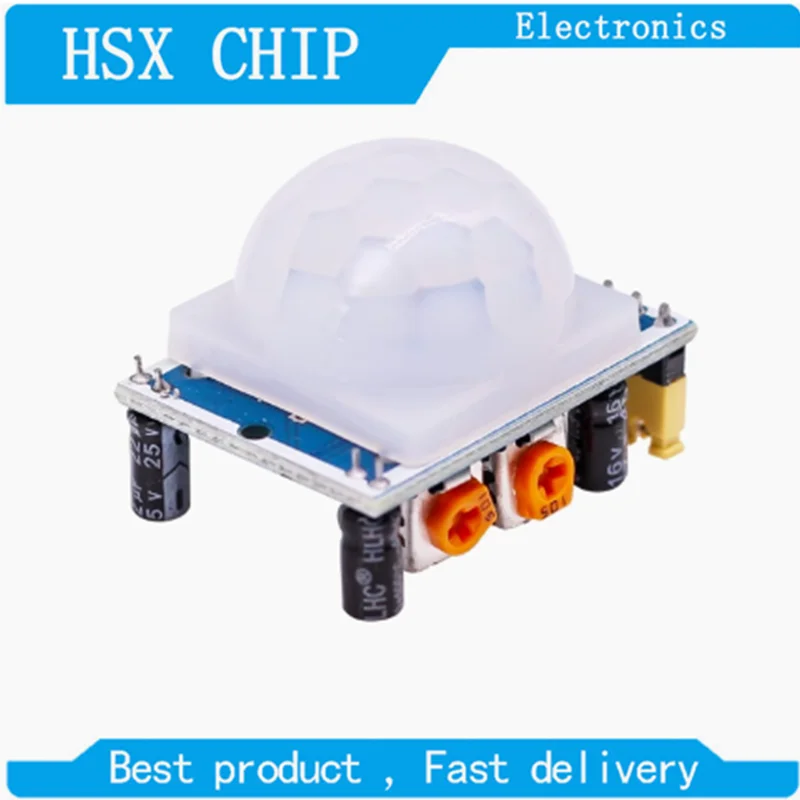
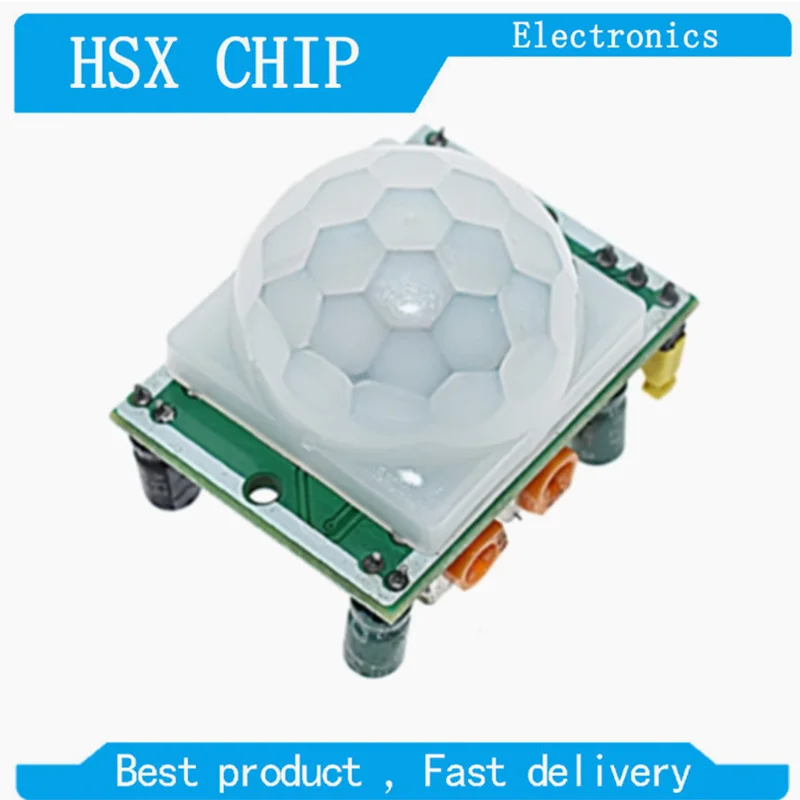
Meet a compact, versatile infrared motion detector designed for Arduino projects and battery-powered setups. The HC-SR501 uses pyroelectric sensing to reliably detect movement within a wide input voltage range, delivering a clean high-level signal for easy integration with microcontrollers and circuits. Three included visuals help illustrate its compact form and mounting options.
Key specifications
- Working voltage: DC5V–20V
- Static power consumption: 65
- Output level: High 3.3V, Low 0V
- Delay time: Adjustable (0.3 s ~ 18 s)
- Embargo time: 0.2 seconds
- Trigger mode: L (not repeatable) or H (repeatable); default value is H
- Induction range: less than 120° cone angle, up to 7 meters
- Working temperature: -15 ~ +70
- PCB dimensions: 32 × 24 mm; screw holes 28 mm apart; screw diameter 2 mm; lens diameter 23 mm
Features and behavior
- Automatic operation: detects entry within sensing range (outputs high); upon leaving, a delay closes the high signal and returns to low
- Light control (optional): you can enable light-dependent operation; factory comes without a photoresistor installed. To use daylight restraint, purchase and install the photoresistor
- Two trigger modes: L (not repeatable) and H (repeatable); default is H
- Not repeatable mode: after the sensor outputs high, the delay expires and the output returns to low
- Repeatable mode: output remains high during repeated detections within the delay; the timer resets with each motion event until the area is clear
- Induction blackout time: default 0.2 seconds after each induction, during which no signal is received
- Wide operating voltage range: DC5V–20V for flexible integration
- Power consumption: quiescent current 65
- High-level signal output: easily interfaced with your circuit
Ideal use cases
Perfect for Arduino-based security or automation projects: motion-activated lighting, alarm triggers, or energy-saving sensors in compact enclosures. Its low standby current makes it suitable for battery-powered prototypes and portable devices, while the adjustable delay and dual trigger modes give you precise control over how the sensor responds to movement.